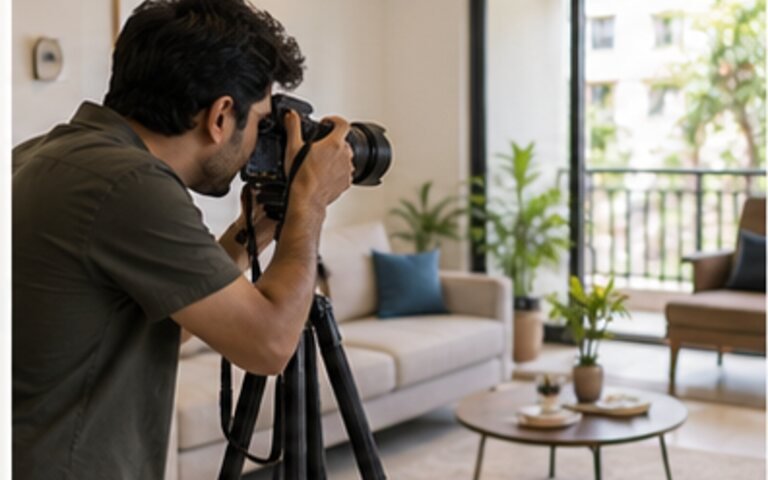
Property photography sits between documentation and promotion. The practitioner profiled in this editorial draft uses level lines, believable lenses and a complete room sequence so viewers can understand the home before visiting. The profile is written as an editorial illustration and must not be presented as a real interview until an identified participant approves it.
Begin with orientation
The photographer walks the property before unpacking equipment, identifies the approach, main circulation and strongest natural-light period, then plans a sequence rather than collecting isolated attractive frames.
Avoid impossible proportions
Wide lenses are used carefully and vertical lines remain believable. When a room is genuinely small, the caption and measured description do more work than visual distortion.
Include the awkward view
A blocked balcony, narrow entry or unfinished common area may be commercially uncomfortable, but omitting it creates the wrong expectation. The client is told why useful media includes limitations.
Protect residents and documents
Family photographs, identity papers, number plates and private details are removed or obscured before publication. Consent and access boundaries are discussed before filming.
Measure success by visit quality
The strongest result is not the highest view count. It is a viewer who arrives understanding the layout and asks questions about the actual decision.
Questions to record
Can the sequence explain the floor plan?
Write down the answer during the visit or document review, together with the date and the name or role of the person who supplied it. Mark the answer as observed, documented or unverified. That small distinction prevents a confident statement from being mistaken for independent evidence later.
Are proportions believable?
Ask for an example, document, demonstration or photograph that supports the answer. If none is available, keep the point open instead of forcing a conclusion. A useful comparison sheet should make uncertainty visible and show what must be checked before money or possession changes hands.
Which limitation must be shown?
Test whether the answer would still matter after paint, furniture and presentation are removed from the decision. Permanent constraints normally deserve more weight than replaceable finishes. Record the practical consequence for the buyer, seller, renter or resident rather than simply marking the item yes or no.
Has private information been protected?
Recheck the answer against a second source where the issue affects title, finance, safety, access or a material cost. Current official documents and qualified advice take priority over portal text, an old brochure or an undated message. Save the version used for the decision.
Did the media improve enquiry quality?
Before closing the review, write the next action, the responsible person and a sensible deadline. An unresolved question should not disappear inside chat history. A short action log turns the inspection into an editorial record that another reviewer can understand and challenge.
Prepare the draft for review
Keep the evidence file separate from promotional material. Label photographs with the place and date, preserve the original dimensions when an image is used to explain scale, and note any edit that changes brightness or removes a distraction. Ask an editor to check the headline, excerpt, classification, links and image description against the article. If the facts may change, add an observation date and a source that a reader can revisit.
Use the evidence carefully
This draft is educational, not a substitute for legal, financial, structural or valuation advice. Verify changing rules, charges, product terms and property-specific facts with the relevant authority or qualified professional. Date every external figure and distinguish observation, owner statement and independently verified evidence.
Before publication, replace this illustrative profile with a named, consented participant or clearly retain the label “editorial illustration.” Never fabricate quotations, credentials or a personal history.
Continue: Browse People or explore the complete SANKUPRA Media story library.