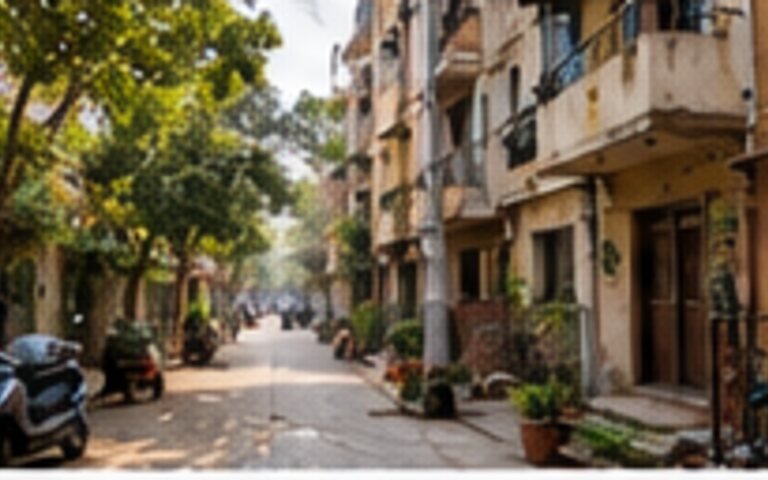
A portal can organize price, size and photographs, but it cannot fully describe what happens outside the entrance. Street width, parking pressure, delivery access, evening noise and the route to public transport affect daily use. These details should be observed at more than one time instead of inferred from a map pin.
Walk the final approach
Begin a few streets away and follow the route a resident would actually use. Note bottlenecks, turns, encroachments, waterlogging marks and whether a car can enter and leave without depending on neighbours to move vehicles.
Return at a different hour
A quiet afternoon can become a crowded evening. Visit during the likely commute, school or market period and listen from inside the home with windows both open and closed.
Check the pedestrian experience
Observe footpaths, crossings, lighting and the distance to daily services. A short map distance can feel inconvenient when the route is unsafe, blocked or difficult for an older family member.
Ask neutral local questions
A shopkeeper, guard or resident may explain waste collection, parking routines or recurring maintenance issues. Ask the same factual question to more than one person and avoid treating a single opinion as proof.
Separate permanent and changeable factors
Paint, fittings and furniture can change. Street geometry, surrounding land use, sunlight obstruction and access patterns are much harder to alter and deserve greater weight in comparison.
Questions to record
Can a car enter and turn comfortably?
Write down the answer during the visit or document review, together with the date and the name or role of the person who supplied it. Mark the answer as observed, documented or unverified. That small distinction prevents a confident statement from being mistaken for independent evidence later.
What changes after 7 p.m.?
Ask for an example, document, demonstration or photograph that supports the answer. If none is available, keep the point open instead of forcing a conclusion. A useful comparison sheet should make uncertainty visible and show what must be checked before money or possession changes hands.
Is the walking route usable for all family members?
Test whether the answer would still matter after paint, furniture and presentation are removed from the decision. Permanent constraints normally deserve more weight than replaceable finishes. Record the practical consequence for the buyer, seller, renter or resident rather than simply marking the item yes or no.
Are there recurring access or drainage issues?
Recheck the answer against a second source where the issue affects title, finance, safety, access or a material cost. Current official documents and qualified advice take priority over portal text, an old brochure or an undated message. Save the version used for the decision.
Which compromises are permanent?
Before closing the review, write the next action, the responsible person and a sensible deadline. An unresolved question should not disappear inside chat history. A short action log turns the inspection into an editorial record that another reviewer can understand and challenge.
Prepare the draft for review
Keep the evidence file separate from promotional material. Label photographs with the place and date, preserve the original dimensions when an image is used to explain scale, and note any edit that changes brightness or removes a distraction. Ask an editor to check the headline, excerpt, classification, links and image description against the article. If the facts may change, add an observation date and a source that a reader can revisit.
Use the evidence carefully
This draft is educational, not a substitute for legal, financial, structural or valuation advice. Verify changing rules, charges, product terms and property-specific facts with the relevant authority or qualified professional. Date every external figure and distinguish observation, owner statement and independently verified evidence.
Use the listing to create a shortlist, then use the street to test it. A modest home on a workable lane can serve a household better than a polished interior whose surroundings create friction every day.
Continue: Browse Story or explore the complete SANKUPRA Media story library.